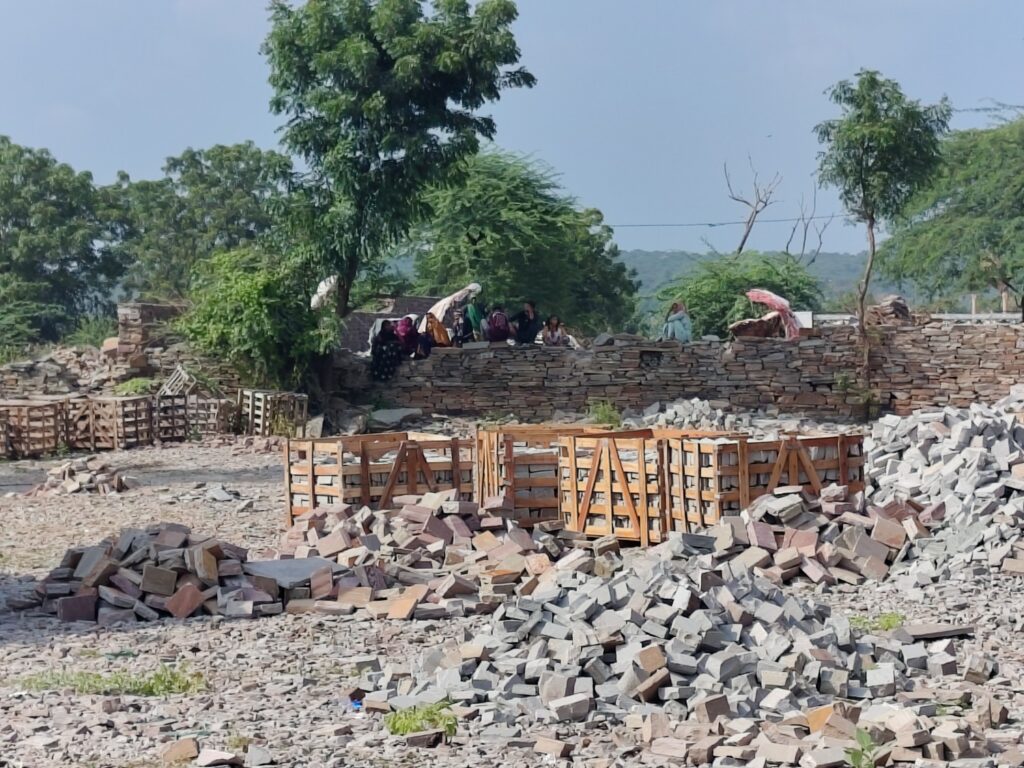
Rajasthan, India, is a key global supplier of natural stone, particularly sandstone from the Bundi district. While the region is known for its high-quality cobblestones, the supply chain is marked by serious human rights concerns—including child labour in home-based work, and significant health and safety risks such as workplace accidents and silicosis caused by prolonged dust exposure.
For over a decade, Arisa has partnered with civil society partners in Rajasthan to combat child labour and improve working conditions in Rajasthan’s sandstone sector. This long-term effort combines an area-based approach with a supply chain approach to drive sustainable change.
Watch our video ‘Stones with Stories: a shared path’
Integrating area-based and supply chain approaches
The area-based approach tackles the root causes of child labour by strengthening child protection systems and promoting the norm that every child should be in school, not at work. It involves coordinated action by teachers, local authorities, employers, parents, and children. Alongside this, the supply chain approach focuses on human rights due diligence and the active engagement of international companies and their suppliers to drive systematic improvements in adult working conditions across the supply chain.
Supply chain interventions
Belgian companies Stone NV and Brachot have been working with Arisa and Indian partners to improve employment and working conditions in their supply chains. This ongoing initiative began with a comprehensive risk assessment conducted at both direct supplier sites and further down the chain—reaching all the way to quarries and cobble yards. Based on the findings, a tailored improvement plan was developed. This plan has already been successfully implemented at a shared supplier factory – Bundi Silica and is now being rolled out at the company’s quarry site.
Kristof T’Sjoen, Stone NV: “From the start, we knew that working one-on-one—with just one supplier and one buyer—wouldn’t be enough. Real impact requires joining forces across the entire chain: importers, exporters, manufacturers, cobble yards, home workers—even competitors.”
Concrete improvements at Bundi Silica’s factory include:
- Regular occupational health and safety (OHS) and first aid training, alongside the introduction of safer work processes.
- Formal registration of all workers, with complete documentation in place—including ID (Aadhaar), contracts, wage records, and payslips.
- Enrolment in key social security schemes, with training provided to workers and their families on how to access and benefit from them.
- Awareness sessions on workers’ rights, entitlements, safe work practices, and the proper use of personal protective equipment (PPE)—leading to improved safety procedures and increased PPE usage.
Kristof Callebaut, Brachot: “Awareness around PPE has improved a lot. Accidents can happen in an instant—but with the right protective gear, workers are much better protected.”
- A grievance committee with equal representation from workers and management is now fully operational. All members are active and vocal—regularly identifying, recording, and resolving issues.
One of the workers who is a member of the grievance committee explains: “The grievance committee has become a vital platform for workers to speak up. It has resolved issues like poor drainage, unhygienic toilets, missing PF contributions, and supervisor behaviour.”
Navneet Bansal, Bundi Silica: “Now that the grievance committee has been functional for a while, we see that workers are more empowered; they are becoming more assertive and independent.”
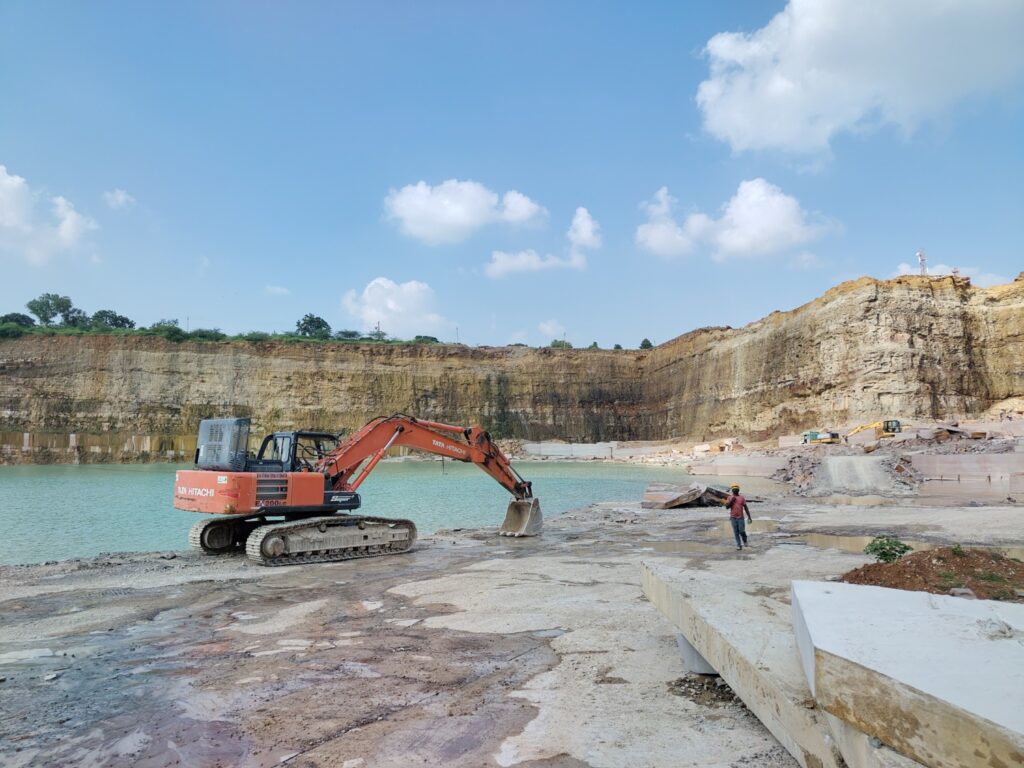
Improvements at the quarry level
Since June 2025, a structured improvement programme has been underway at the quarry site, which employs around 600 people. Senior and middle management have received training on business and human rights, as well as relevant labour regulations, while workers have undergone initial training on occupational health and safety. A process is currently in progress to establish a grievance committee, a safety committee, and an accommodation committee.
In addition to these efforts, the quarry has taken several proactive steps on its own initiative. These include the installation of a sewage treatment plant, the construction of a sheltered workspace for cobble workers with access to safe drinking water and toilets, and the establishment of a crèche facility for workers’ children.
Next up: improving conditions at cobble yards and homeworking set-ups
Diewertje Heyl, Arisa: “A lot of progress has been made, but we are not there yet. The next step is to improve conditions in the cobble yards and homeworking setups where many women work—to ensure they receive fair wages and decent working conditions,”
As part of this next phase, a joint visit by Arisa, Stone NV, and Brachot to Rajasthan included a key stakeholder meeting on 9 September. The meeting brought together cobble yard owners, importers, exporters, and civil society organisations to kick off improvement efforts in the cobblestone supply chains of Stone NV and Brachot. The focus: improving labour conditions in cobble yards and among home-based workers. Encouragingly, 10 cobble yards have committed to participating in this joint improvement initiative—marking a significant step forward in addressing some of the most challenging parts of the supply chain.