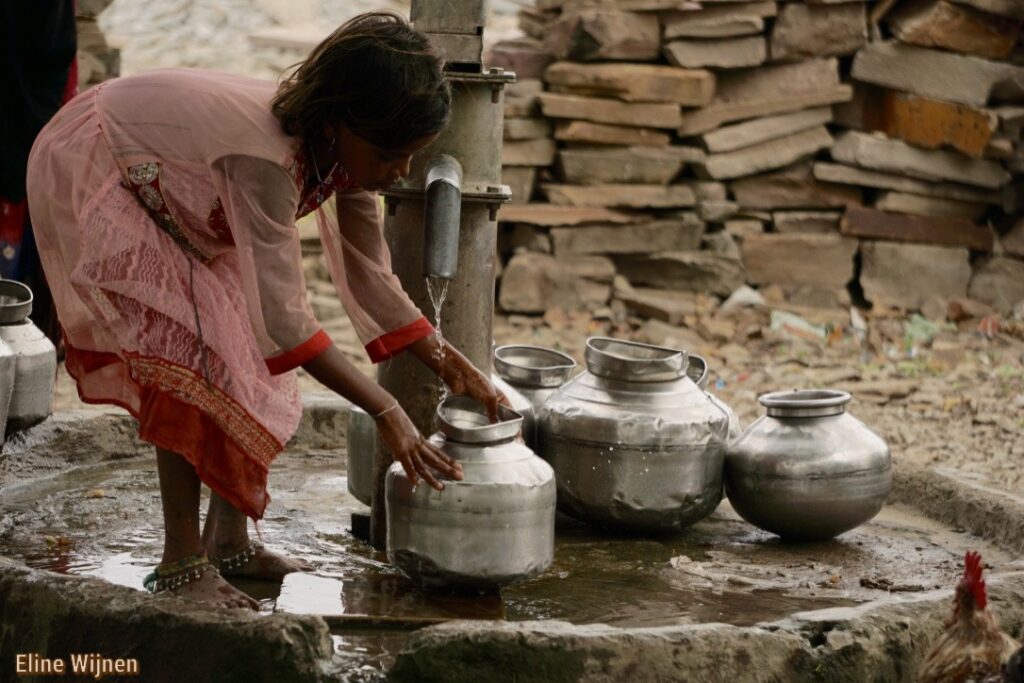
Arisa collaborates with partner organisations in South Asia to combat child labour sustainably. We do this by supporting the setting-up of child-labour-free zones, in which local authorities, teachers, employers and parents join forces to get all children out of work and into school. Companies can strengthen this approach by conducting thorough research into child labour risks throughout their supply chains and taking effective measures to prevent child labour and provide remediation where necessary.
Child-labour-free zones
A child-labour-free zone is an area – for example, a village – where everyone is convinced that no child should work and that every child should go to school. Local authorities, teachers, employers, parents and children work together to ensure that all children are out of work and in school. Child labour is no longer accepted in these zones because of widespread agreement that all children are entitled to good full-time education.
Within child-labour-free zones, no distinction is made between ‘light’ (or supposedly acceptable) forms and ‘worst’ forms of child labour.
As dropping out from school and child labour are closely linked, being out of school is a high-risk situation. Stakeholders in child-labour-free zones actively trace and approach children who are not in education. These include:
- children who have never been enrolled in school;
- children who are enrolled but have been absent for a long time;
- children who have dropped out or have been forced to stop going to school;
- children who work or participate in work – for example, as seasonal workers, shepherds, domestic workers or miners – whether in the formal or the informal sector (children usually work informally).
Many of these children belong to marginalised groups, such as Dalits, increasing their risk of exploitation. Child-labour-free zone protagonists aim to reach every child, regardless of gender, caste, ability/disability or origin.
Organisations and individuals active in child-labour-free zones track the attendance and progress of all school-age children carefully until each child completes secondary school.
If everyone takes responsibility, all children can go to school. Arisa works with partners to encourage and support activities involving local authorities and community groups to protect the rights of all children. Examples include women’s savings and loan groups and the joint development of income-generating activities for low-income households.
Community mobilisers play a vital part in establishing child-labour-free zones. They initiate conversations within communities about the harmful effects of child labour and the importance of education. Through door-to-door visits and meetings and by establishing neighbourhood groups, they help to challenge harmful attitudes and behaviours and build support for change.
Community mobilisers act as a link between the community and external organisations, identify children who are working and help them to return to school, and support families in finding alternatives to child labour. They also establish local monitoring systems to prevent relapse and encourage communities to take the lead themselves. In this way, community mobilisers ensure that the change comes from the bottom up and is permanent.
Why a production chain approach is also needed
Child labour often occurs in the lower tiers of international production chains – on farms, in informal workplaces and in homeworking environments – where supervision and transparency are limited. In line with international standards such as the OECD Guidelines for Multinational Enterprises and the UN Guiding Principles on Business and Human Rights, companies have a responsibility to prevent and address child labour. To fulfil this responsibility, it is important to accurately identify the risks of child labour, including in the lower production chain tiers, and to pay particular attention to vulnerable groups, such as children from marginalised communities and other children at increased risk of exploitation.
Companies must take effective measures to prevent child labour, such as paying living wages to adults and adopting responsible sourcing practices. If child labour is found, companies should also actively participate in remedial measures, such as facilitating children’s reintegration into formal education and offering temporary income support to affected families until the children attain adult working age.
Arisa’s combined approach
The strength of Arisa’s approach lies in combining area-specific work with a production chain strategy. This creates a more coherent and comprehensive way of working that both addresses the local causes of child labour and holds companies accountable for their responsibilities in the supply chain.
The combination of area-specific and production chain approaches ensures that:
- All working children in a community are reached, including those in the lower tiers of international production chains,
- Companies take responsibility for preventing and tackling child labour throughout their supply chain and contribute to sustainable solutions.
- Children do not shift from one sector to another or end up in more hidden or dangerous forms of child labour.
- Children are not only taken out of child labour but also guided towards formal education as a sustainable alternative.
- Education offers the prospect of a better future, with access to decent work once children reach adult working age.
- Local initiatives to improve family income are supported, so that children do not have to work and adults can work under decent conditions.
- Structural change takes place, even when the market changes, such as when a different production sector becomes locally prominent.
Collaboration as key
Arisa takes a multi-stakeholder approach in which companies, governments, schools, communities and local organisations work together to create sustainable child labour-free zones. Partner organisations in production countries play a crucial role in this, as they understand the local context, build trust and mobilise communities.
What we ask of companies
- Carry out due diligence down to the deepest layers of the production chain, especially the informal sector.
- Support effective approaches such as child-labour-free zones through long-term engagement and financial support.
- Actively convey the message of the child-labour-free zone to supply chain partners to stimulate involvement and behavioural change throughout the chain.
- Collaborate with civil society organisations, governments and other companies in production regions.
- Invest in living wages and incomes and better working conditions for adults, so that children do not have to contribute to the family income.
Finally
Child labour-free zones demonstrate that child labour can be effectively eradicated by ensuring that all children can attend school, providing families with opportunities and encouraging companies to drive sustainable change. The strength of this approach lies in collaboration: between communities, civil society organisations, governments and (local and international) companies. If children have access to education, families are given livelihoods and production chains are free of exploitation, a future without child labour is within reach.